
Tuberculosis (TB) remains one of the public health challenges in Indonesia. The country continues to face a high TB burden. According to the WHO, approximately 1.1 million TB cases are projected to occur in Indonesia in 2024, accounting for about 10% of all new TB cases worldwide. In addition to the high estimated number of cases, Indonesia also continues to face a gap between the estimated number of cases and the number of cases that are actually detected and reported.
In this regard, the school environment also warrants attention. Schools serve as settings where students engage in routine activities. When there are undiagnosed cases of contagious TB, there is a risk of exposure to those in the surrounding environment.
Be Aware of TB in Schools
TB does not only affect adults. Children and adolescents can also contract TB, and this age group continues to face challenges—the WHO notes that some TB cases among vulnerable groups, including children, remain unidentified or unreported.
Schools are a critical environment due to the high intensity of activities that take place there. Students spend hours in classrooms with classmates and teachers, then move to the cafeteria, participate in extracurricular activities, and commute to and from school. While these activities do not automatically make schools hotspots for TB transmission, the presence of contagious TB cases can be a cause for concern if detection and treatment are delayed.
The Ministry of Health also identifies children as a group requiring special attention in TB prevention. Children are particularly at risk of infection when they have close contact with people with TB, including family members who have the disease. Therefore, TB control efforts for children should not only focus on the home but also take into account the environments where they learn and spend their time.
In addition to physical health, TB can impact academic performance. Symptoms such as a persistent cough, fatigue, or a decline in physical condition can interfere with students’ attendance and concentration.
Therefore, education is a crucial component. Students, teachers, and parents need to understand that TB is preventable and treatable, and that anyone who may have TB needs access to proper screening and treatment, not ostracism.
TB Transmission in Schools
TB is primarily transmitted through the air. When a person with infectious pulmonary TB coughs, sneezes, or speaks, Mycobacterium tuberculosis bacteria can become airborne and be inhaled by others. The risk of transmission is higher during close or repeated contact. The presence of infectious cases, duration of exposure, proximity of contact, ventilation, and the condition of the exposed individuals can all influence the risk. Therefore, a comprehensive approach to prevention is necessary.
Early Detection as a Key Component
Indonesia still faces a case detection gap; the WHO estimates that at least one in four TB cases overall remains unreported or undiagnosed, with more than 140,000 undiagnosed cases in 2023. When suspicious symptoms are detected, the appropriate course of action is not to self-diagnose, but to get checked at the nearest health facility. Proper screening can help determine whether a person actually has TB and needs further testing.
Getting to Know the ACCU-TELL® TB Cassette
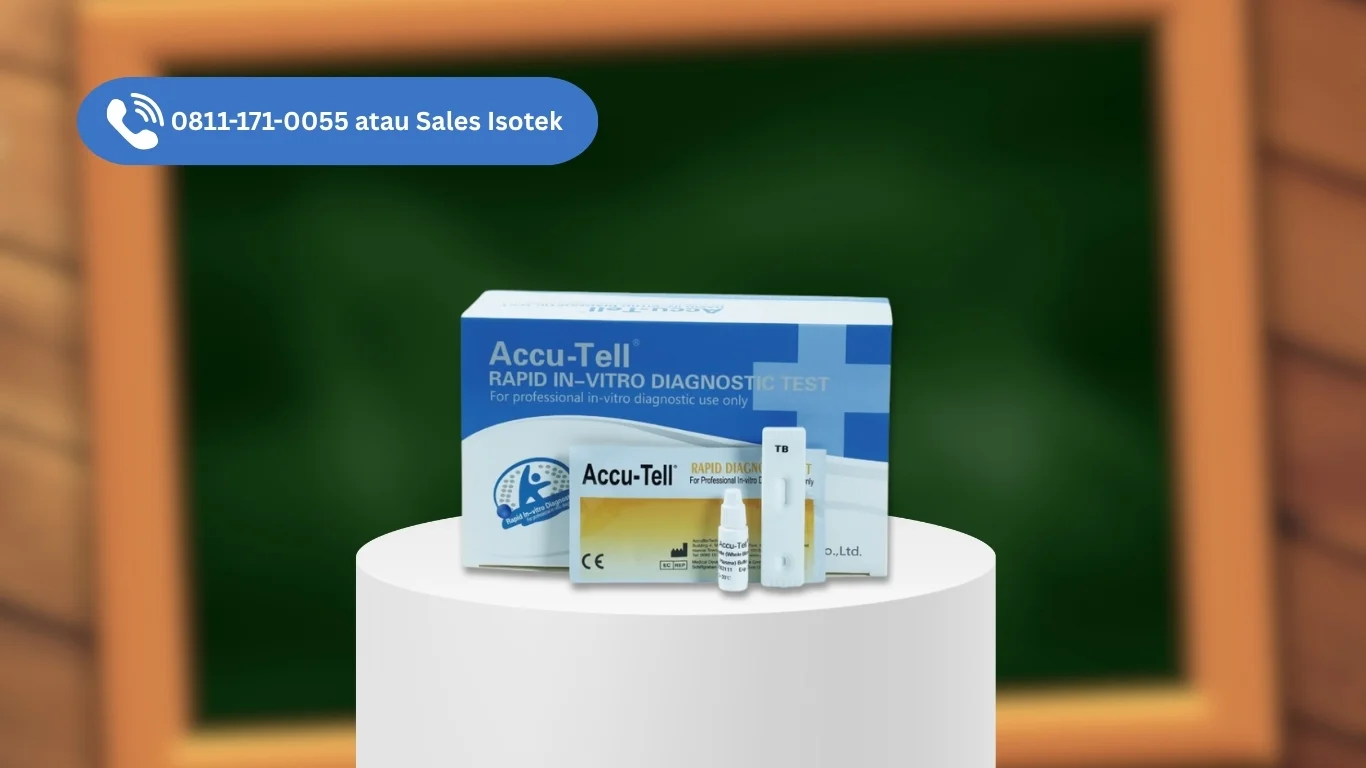
One of the diagnostic products available for tuberculosis testing is the ACCU-TELL® TB Cassette. This rapid test uses the principle of rapid chromatographic immunoassay to qualitatively detect antibodies against Mycobacterium tuberculosis in whole blood, serum, or plasma samples. Results can be interpreted in about 10 minutes. The ACCU-TELL® TB Cassette has also undergone clinical trials, yielding a sensitivity of 83.8%, a specificity of 98.8%, and an accuracy of 95.7%.
However, it is important to understand the purpose of the test. Antibody-based tests should not be used as the sole basis for diagnosing active TB. Diagnosis of active TB still requires clinical evaluation and appropriate diagnostic methods. Thus, the results of the ACCU-TELL® TB Cassette test can serve as supporting information in the screening process, but their interpretation must still take into account clinical conditions and follow-up examinations by healthcare professionals.
TB control efforts in school settings should emphasize the importance of screening and early detection. By identifying potential cases early on, testing and treatment can be carried out more quickly, thereby reducing the risk of transmission. Therefore, TB screening is a vital component in creating a healthier, safer, and more responsive school environment to health risks.
References
- World Health Organization (WHO). Indonesia Charts Next Phase of TBC Response Through National Programme Review. 8 January 2026.
- World Health Organization (WHO). Strengthening TBC Surveillance to Accelerate Indonesia’s Path to Elimination. 1 July 2025.
- Kementerian Kesehatan Republik Indonesia. Not Just a Myth: 10 Evidence-Based Tips to Prevent TBC in Children.
- Kementerian Kesehatan Republik Indonesia. Lembar Balik TBC untuk Kader. Direktorat Jenderal Penanggulangan Penyakit.
- World Health Organization (WHO). WHO Operational Handbook on Tuberculosis: Module 5 – Management of Tuberculosis in Children and Adolescents / environmental and infection-control guidance.
- World Health Organization (WHO). Commercial Serological Tests for Diagnosis of Tuberculosis.